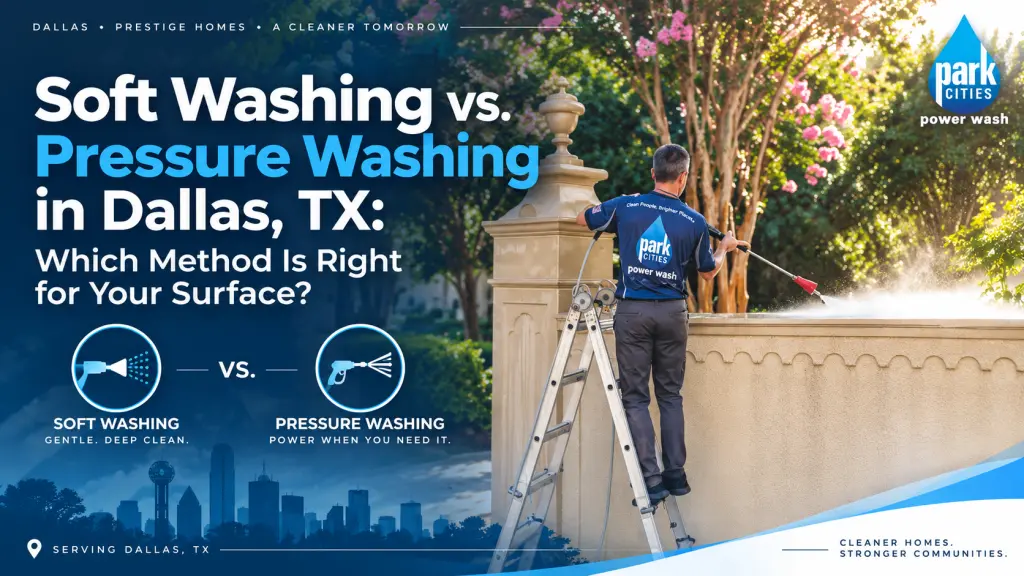
Around Dallas, “pressure washing,” “power washing,” and “soft washing” get used like they mean the same job. They don’t. Picking the wrong one for a surface is how paint gets stripped, stone gets pitted, and roof shingles lose the granules that protect them.
The homes here make this matter more than in most markets. A lot of Dallas houses are finished in Austin stone, limestone, cast stone, and stucco, with very little vinyl siding. Those materials react very differently to a pressure washer than a concrete driveway does. We’ve cleaned these local surfaces since 2016, and our work always starts by matching the method to the material.
The Quick Answer: Soft Washing vs. Pressure Washing at a Glance
Pressure washing runs high, roughly 1,300 to 3,100 PSI depending on the machine and the job, and cleans hard, dense surfaces with force. Soft washing runs low, generally under 500 PSI, closer to the force of a strong garden hose, and lets the cleaning solution do the work on porous or delicate surfaces. Angi’s breakdown of the two methods lines up with that split: high pressure for durable surfaces, low pressure plus biodegradable solution for painted siding, shingles, and wood.
| Factor | Soft Washing | Pressure Washing |
|---|---|---|
| Water pressure | Low (about 100–500 PSI) | High (about 1,300–3,100 PSI) |
| How it cleans | Cleaning solution kills growth at the root, then water rinses | Water force physically blasts away buildup |
| Best for | Roofs, Austin stone, limestone, cast stone, stucco, painted siding, hardie board, wood decks and fences | Concrete driveways, sidewalks, patios, pool decks, brick pavers |
| Removes | Algae, mold, mildew, organic staining | Dirt, grime, mud, some oil and grease (with degreaser and hot water) |
| How long results last | Longer, because growth is killed at the source | Shorter if the growth itself isn’t treated |
| Risk if used wrong | Rarely damages anything (very gentle) | Can strip paint, etch wood, pit stone, force water behind siding |
| Our method | Wash, Treat, Rinse, with solution strength dialed to each surface | Flat surface cleaner plus degreaser and hot water for stains |
What Soft Washing Actually Is
Soft washing cleans with chemistry, not force. A low-pressure cleaning solution (sodium hypochlorite and a surfactant) goes on the surface, dwells long enough to kill the algae, mold, and mildew at the root, and then gets rinsed off gently.
That gentle approach is what makes it safe on materials a pressure washer would wreck. On a chalky cast stone facade or a stucco wall, we can clean off years of organic growth without touching the finish underneath.
Our version of this is a three-step process we call Wash, Treat, Rinse: a light wash, a soft-wash treatment matched to the surface, and a rinse, repeated as needed. The strength of the solution changes depending on what we’re cleaning, so a delicate limestone surface and an algae-covered roof each get the right mix instead of one blanket approach.
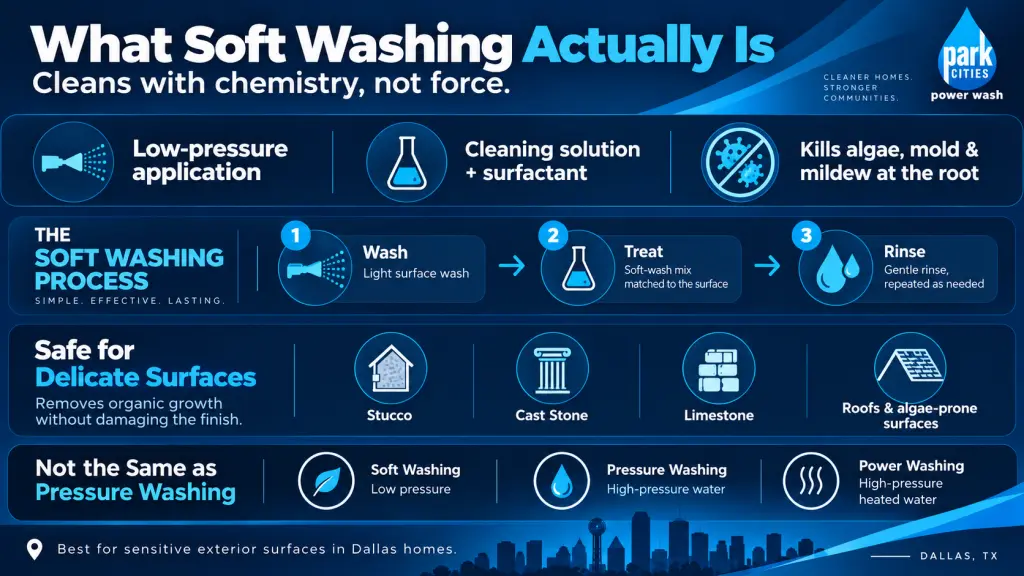
People sometimes ask if “power washing” is the same thing. Power washing and pressure washing both use high-pressure water and are different from soft washing. The main distinction between the two is that power washing typically adds heat, which helps cut grease and gum, while standard pressure washing uses unheated water.
What Pressure Washing Actually Is
Pressure washing uses the force of the water itself to clean hard, non-porous surfaces. Concrete is dense and built to take that force, which is why a driveway, sidewalk, or patio can handle a pressure setting that would carve into softwood or open up stucco.
We run a flat surface cleaner on flatwork so the results come out even instead of streaked with wand marks. For oil, grease, tannin stains from leaves and acorns, and rust, we add a degreaser and hot water to break the stain down before rinsing.
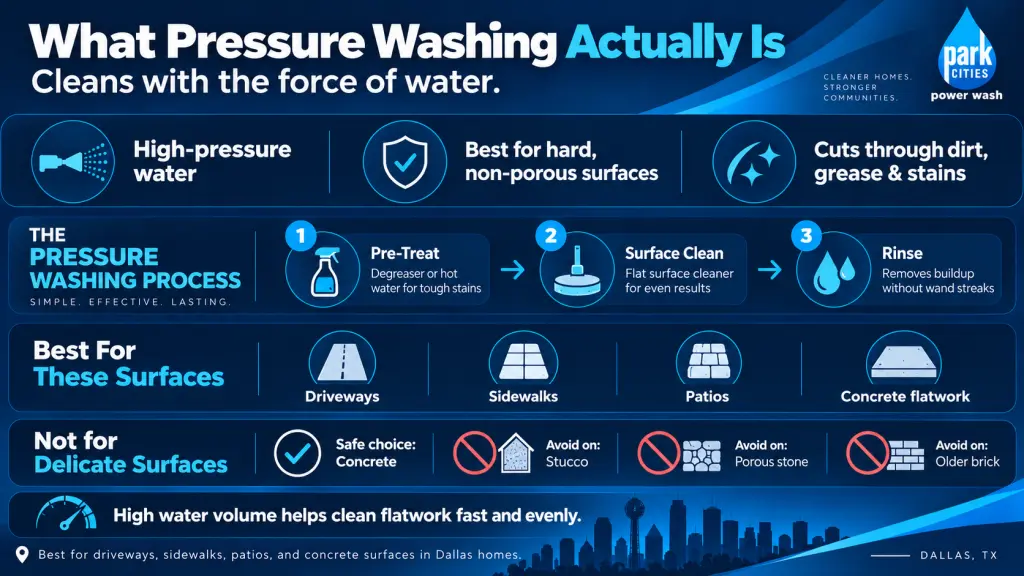
The difference comes down to density. Concrete is hard all the way through, so it takes high pressure without harm. Stone, stucco, and older brick are porous, so high pressure doesn’t just clean the surface, it drives water into the material and erodes it. Our commercial washers move a high volume of water (around 8 gallons per minute), which cleans flatwork faster and keeps the job efficient.
Which Method for Which Dallas Surface
The common surfaces on a Dallas home break down like this. We lead with the materials we actually see in this area, because a generic “vinyl siding” guide doesn’t describe most homes here.
Austin stone, limestone, and cast stone: Soft wash. These are porous, and cast stone in particular is decorative, so high pressure can pit or wear down the surface. This is the material homeowners ask us about most, and the honest answer is that it cleans up beautifully with the right low-pressure approach in our Dallas house washing work.
Stucco: Soft wash. Stucco is textured and porous. High pressure opens hairline cracks and pushes moisture behind the finish, which is exactly what you don’t want in a wall.
Hardie board and painted siding: Soft wash. Low pressure protects the paint and keeps water from getting driven behind the panels.
Brick: Usually soft wash, especially on older homes where the mortar is more vulnerable. We use pressure only where the brick and mortar can clearly take it.
Wood and IPE decks, wood fences: Soft wash for painted or composite surfaces. Bare wood takes more controlled pressure to strip built-up grime. We clean and prep the wood so it’s ready to stain, but we don’t apply the stain ourselves.
Concrete driveways, sidewalks, patios, pool decks, and flagstone: Pressure wash. This is where a flat surface cleaner earns its keep, and it’s the core of our driveway and concrete cleaning. For oil stains, we pre-treat with a degreaser and hot water to lift as much as the slab will release.
Roofs (asphalt shingle, metal, tile, slate): Soft wash only. The Asphalt Roofing Manufacturers Association is direct about this: never pressure wash an asphalt shingle roof, because it strips the granules and can lead to premature roof failure. There’s a financial angle too, since many shingle and fiber-cement manufacturers prohibit high-pressure cleaning, so blasting a roof or Hardie-board can void the warranty. Our soft-wash roof cleaning keeps fragile roofs touchless, and we never walk on metal, tile, or slate.
Windows: Low pressure with a water-fed pole and pure water, so there’s no chemical residue and no risk to the glass or frames. That same pure-water method carries over to our window cleaning.
If you want to go deeper on why local homes need this surface-by-surface care, we cover it in our guide to what makes Dallas house washing different.
Why Soft-Wash Results Last Longer in Dallas
Soft washing lasts longer because it kills the growth at the source instead of just rinsing it off. Pressure washing removes the algae you can see, but it leaves the roots behind, so the green grows back. Soft washing clears the organism itself, and the surface stays clean far longer.
That gap matters more in North Texas than it does in a dry climate. Our hot, humid summers, afternoon storms, and heavy tree cover feed algae and drop tannin-staining debris from oaks and pecans. On shaded, north-facing walls and roofs, growth that was only surface-rinsed can return within weeks.
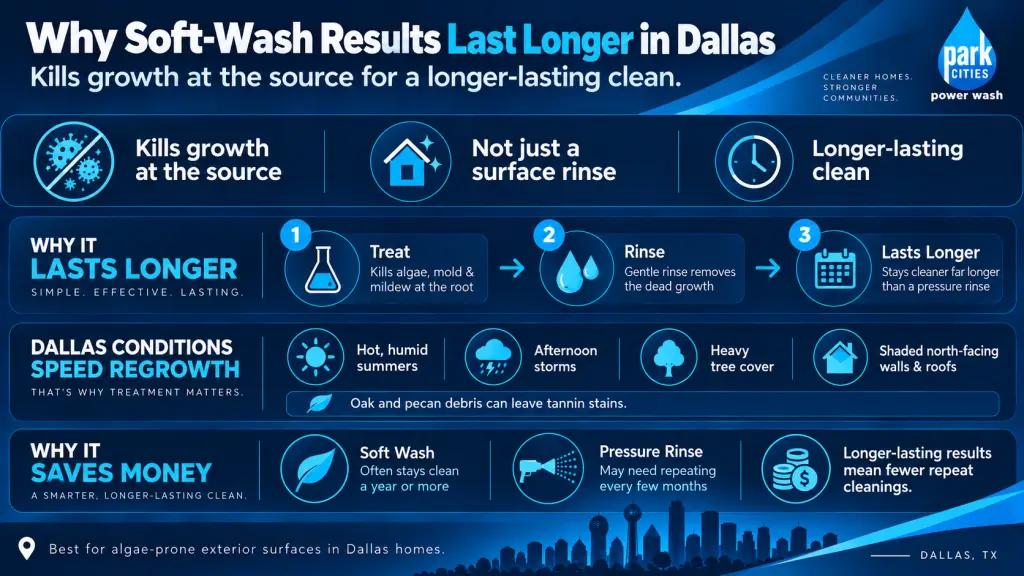
Choosing the right method isn’t only about avoiding damage. A soft-washed surface that stays clean for a year or more saves you money against a pressure rinse you would otherwise repeat every few months.
What Each Method Can’t Do
Knowing the honest limits of each method is part of getting the result you want, so we set expectations clearly before we start.
Older oil stains call for a realistic approach. We degrease and hot-water treat them to lift as much as the concrete will release, and we’ll tell you honestly what a stain that has soaked in for years is likely to look like afterward.
We clean and prep wood, but we don’t stain, oil, or restore it. A bare-wood deck can be left ready for you or another pro to stain.
Delicate roofs get cleaned touchless, from above or from the side, because we won’t walk on metal, tile, or slate. Where a lift or safe vantage point can’t reach a section, we point that out during the estimate so there are no surprises on the day of the job.
How Often Should You Wash, and How Long Do Results Last?
Most Dallas homes do well with a full exterior wash about once a year, and shaded or tree-heavy lots often need it twice. General industry guidance lands in the 12-to-24-month range, and humid climates like ours sit at the shorter end of that. We break the local timing down further in our guide to how often you should pressure wash your house in Dallas.
Tree cover is the big local variable. Homes in Preston Hollow, Lakewood, and other established, shaded neighborhoods collect algae and tannin staining faster, especially on north-facing elevations that stay damp. A house in full sun on an open lot can go longer between washes than one tucked under mature oaks.
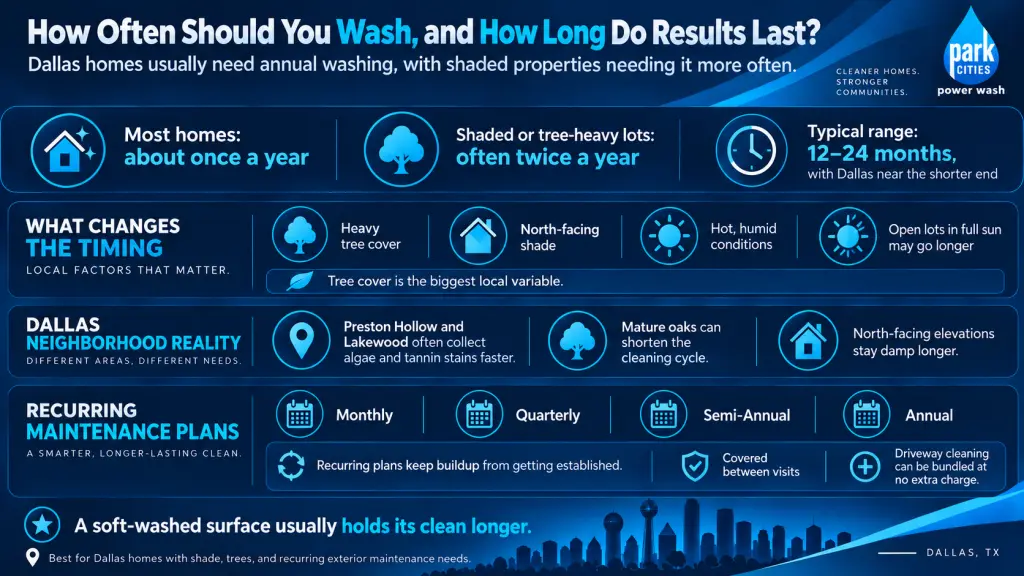
Since soft-washed surfaces hold their clean longer, many homeowners would rather not track the calendar at all. We offer recurring maintenance plans (monthly, quarterly, semi-annual, or annual) that keep everything on schedule so buildup never gets established. Recurring customers are covered between visits, and some services, like driveway cleaning, can be bundled in at no extra charge.
DIY vs. Hiring a Pro (and How to Choose One)
A rented pressure washer is far more powerful than most home exteriors can safely handle. A gas unit from the rental counter often runs 2,800 to 3,400 PSI, well beyond what stone, stucco, cast stone, painted siding, or a shingle roof can take. One pass at the wrong pressure can undo years of any money you saved, which is worth weighing against what professional pressure washing costs in Dallas. DIY can make sense on a sturdy concrete driveway, but on the house envelope or the roof, the risk usually isn’t worth it.
If you’re hiring out the work, a few questions separate an experienced professional from someone who just owns a pressure washer:
- Are they fully insured, including workers’ compensation? This protects you if a technician is hurt on your property or your home is damaged.
- Do they soft wash delicate surfaces, or do they run high pressure on everything? The right answer is the method matched to the material.
- Can they show before-and-after photos of homes like yours, in stone or stucco?
- Will they tell you who’s showing up and send an arrival update?
Walk away from cash-only demands, full payment up front, no verifiable business address, or a bid that sits suspiciously far below everyone else’s.
This is how we run every job. We’re veteran-owned and fully insured, including workers’ comp, with a dedicated support team handling scheduling and follow-up instead of a one-person operation, and we match the method to the surface every time.
Is It Safe for Plants, Pets, and My Home?
Yes, at the strengths we use, and we take specific steps to keep it that way. Before any solution goes on, we pre-soak the surrounding plants, cover what needs covering, rinse throughout, and post-treat landscaping with a neutralizer.
Sensitive items like cameras, outlets, and outdoor TVs get covered, and we ask that pets and kids stay inside while we work. On certain painted finishes we switch to a gentler process that protects the coating and still gets the surface clean.
If your home has windows that are known to leak, tell us before we start. We take extra precautions at those spots, and if any water gets in, we take care of it.
Curb Appeal, Property Value, and Neighborhood Standards
A clean exterior is the first thing anyone notices, and algae streaks or a stained driveway read as neglect. In a market like the Park Cities, that impression carries real weight, both with neighbors and with buyers. Real estate research consistently links strong curb appeal to higher sale prices, and exterior cleaning is one of the lower-cost ways to protect that impression.
Highland Park and University Park don’t run planned-community HOAs, but the cities hold high standards for property upkeep and exterior appearance. Regular cleaning keeps a home comfortably within what the neighborhood expects.
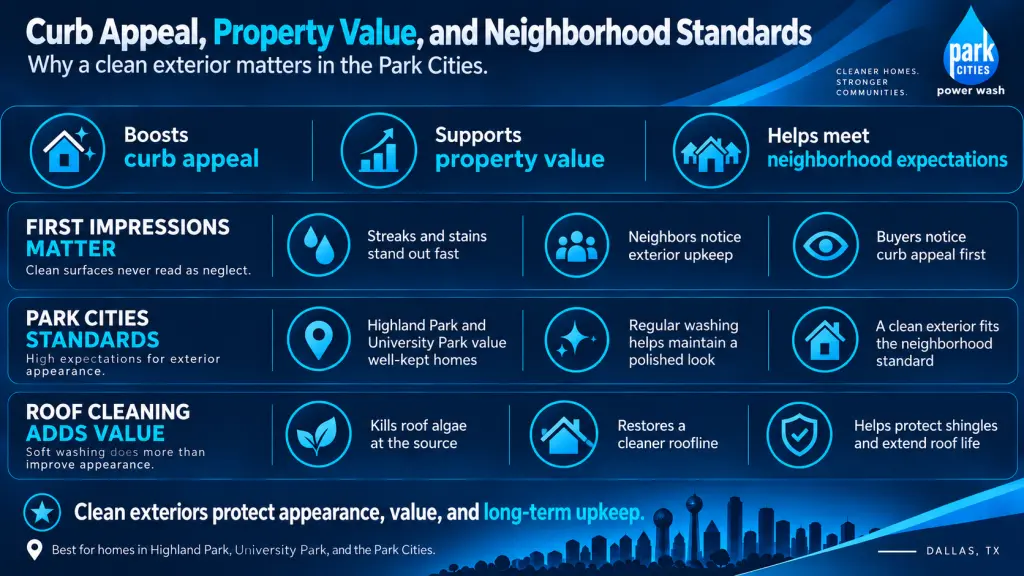
On a roof, soft washing does more than restore the look. Killing the algae protects the shingles and helps them last, a maintenance benefit that competitors rarely connect to the value of the home.
Frequently Asked Questions
Is power washing the same as pressure washing?
They’re nearly the same, since both use high-pressure water. “Power washing” usually adds heated water, which helps cut grease and gum, while standard pressure washing uses unheated water.
Will soft washing remove black streaks on my roof for good?
Soft washing kills the algae causing those streaks at the root, so they fade and rinse away over the following days and stay gone far longer than they would after a surface rinse. It’s the method roofing manufacturers recommend for asphalt shingles.
Can you soft wash and pressure wash on the same visit?
Yes, and most Dallas homes need both. A typical visit soft-washes the house and roof while we pressure wash the driveway, walkways, and patio, so every surface gets the method it’s built for.
Does soft washing use bleach, and is that safe for my landscaping?
It uses a diluted cleaning solution matched to the surface, applied with plant protection built into the process, since we pre-soak, cover, rinse, and neutralize the landscaping. On delicate materials like cast stone, we dial the strength down further.
My home has leaky windows. Can you still wash it?
Yes, just point out the problem windows before we start so we can take extra precautions, like placing towels inside and keeping water away from those spots. If any water does get through, we’ll make it right.
Ready for a Clean That Lasts?
Not sure whether your home needs soft washing, pressure washing, or both? Sorting that out is exactly what we do for you. We’ll assess your surfaces and give you an honest quote, either in person or from a few photos, with no pressure tactics and no surprise upsells.
Every job is backed by our 100% satisfaction guarantee, and if something isn’t right, we return within 24 hours to fix it. Call us at (214) 390-3377 to get started.